Grade: B-
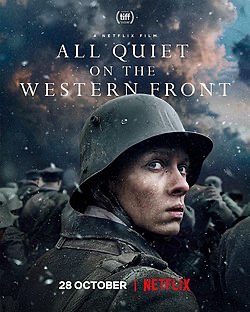
I would likely rather see a documentary about the construction of soldiers’ trenches than I would most war movies. I have long been fascinated by them, and I have so many questions. How do they build them? When do they build them? Who builds them? Soldiers? Contractors? How do they find the time? Does the enemy just not bother them during the entire construction period? That’s convenient. The trenches in the 2022 Netflix remake of All Quiet on the Western Front are impressive elaborate works of art. Some serious time, care, resources, manpower, and engineering prowess went into these. There are bridges, staircases going down into bunkers, and they even made signs to designate each one (Bunker 1, Bunker 2, etc.) If it weren’t for the tiny pesky detail of being in battle and possibly not making it home, these look like cozy, cute places to hang out.
This was my first exposure to any iteration of All Quiet on the Western Front. The audio is in German. I will always shout from the rooftops that the best way to experience a foreign language [for you] movie is with the original audio, and subtitles of your choice. There should be a way to customize that in Netflix, if you needed to know. I tend to think of German soldiers as dark haired, block mustachioed, cartoonishly evil villains. With this film, it’s very easy to forget where they come from; it feels like those guys could be any of us. Just regular people with hopes and dreams, who were suddenly uprooted from regular life. Some may not have ever been in a fight before. Our hero is Paul, played by appealing 27-year-old baby-faced actor Felix Kammerer. I used to sarcastically remark how nice it was of the bullets, bombs, rockets, and grenades to consistently miss the hero of the film, and instead hit the minor characters – but then, that’s why this particular person has been made our focal point, right? There would be no movie if we followed the journey of someone who is killed immediately.
A detriment to war movies is the difficulty to tell all these guys apart, with the identical helmets and uniforms, even before they get bloody, dusty, and muddy. I need more than a cast list most of the time – I need a score card. And indeed, with All Quiet on the Western Front, I would “lose” Paul from time to time. The names of his buddies would sporadically pop in and out, and I couldn’t always keep them straight or remember their current status. This movie has its share of strengths and bright spots, and though it likes to linger on shots long after we’ve gotten the point, I did find myself getting emotionally invested. Paul’s final scene is more dramatically powerful than realistic, but it’s effective. The first and last shots are gorgeous; they look like something Bob Ross would paint. The score was a treat to listen to. There’s one piano piece in particular that made me think of the intro to Billy Joel’s “Leningrad,” with the classical sounding progressions, and especially the accented syncopated single notes on off-beats.
War is one of my least-liked genres – my favorites of which continue to be Enemy at the Gates, Hacksaw Ridge, and 1917. But All Quiet on the Western Front has its moments, in the midst of my admiring the trenches so much. Honestly, though, psyching myself up to watch was like, I hear, running a marathon. “An hour and 15 minutes in. Halfway there. 13 more miles to go. We’re doing it.”
Grade: B-
 Film Reviews by Mark
Leave a comment