Grade: A-
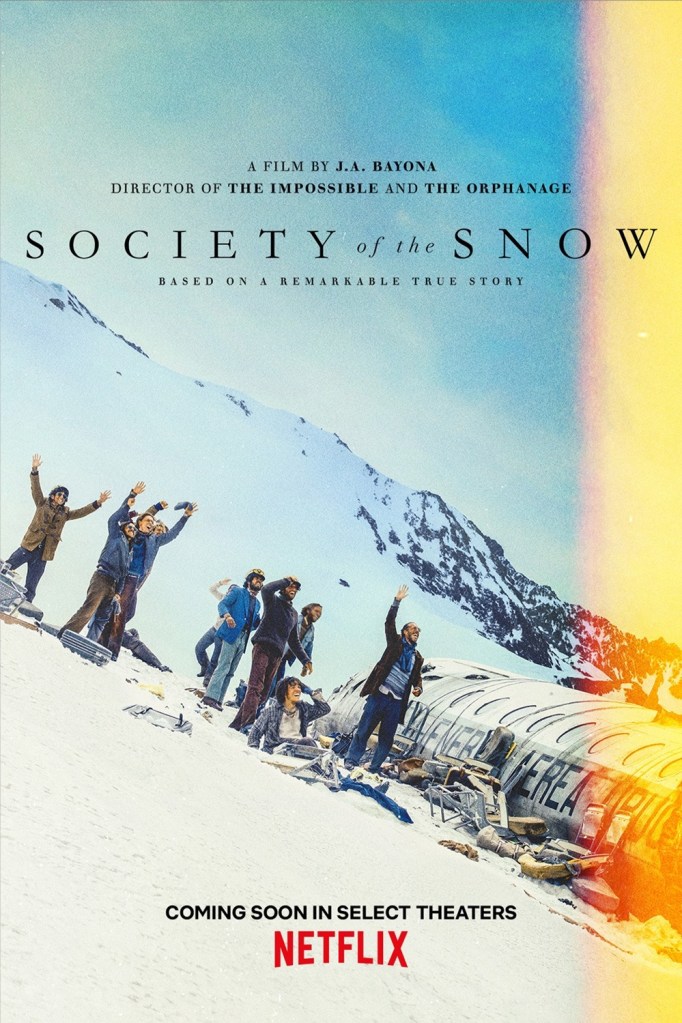
Society of the Snow falls into the category of the best films you won’t rewatch often, if ever again. It’s a disaster movie, and my favorite since The Impossible. It’s an exhausting, draining experience – the kind that makes you forget these are actors who got to have a shower and a nice meal at the end of the day. In its 144 minutes, I wasn’t mentally anywhere but the world of the movie. It’s based on a true story, but I was unfamiliar with it, so the ending was a mystery for me. I was finding everything out for the first time here.
It ends well for some people, and for the others, director J.A. Bayona makes a deliberate point of respectfully and intentionally naming and remembering the souls who weren’t as fortunate. This story was most famously chronicled in the 1993 American film Alive, starring Ethan Hawke. In October 1972, a Rugby team is on their way to Chile for a competition, when their plane, caught in turbulent weather, crashes into the Andes Mountains. Most of the passengers are killed instantly. After a handful of days, the survivors hear on the radio that the search has been called off. They are starving. They are freezing. Their pee is black. As an absolute last resort, they make use of the dead bodies. Finally, after upwards of 60 days stranded, injured, sick, cold, and hungry, 16 passengers are lifted out alive. You can go visit the crash site. One of the survivors, now in his 70s, is involved with the tours.
The cannibalism caused controversy after the rescue. People (who have only ever experienced being safe and sound and warm and well-fed at their homes) had some problems with that, to which my retort would be “easy for you to say.” This isn’t explored in Society of the Snow, and neither is an interesting tidbit that I learned. The two men who set out on foot to find help traveled 38 miles west, thinking that was the quickest route to civilization. Unknown to them at the time, if they had instead gone east, in 13 miles they would have found an abandoned hotel, near a road that leads into a nearby town. There’s not an obvious way to incorporate that into a movie, but it’s a detail that adds to the tragedy. The technical aspects are awesome, and performances are convincing. There’s enough humor and camaraderie amongst the cast to add emotional weight. And we feel right there with them for every last shiver, death, cut, bruise, avalanche, and other setback. I’d love to see a documentary, or get more information on the making of the movie.
Bayona also directed The Impossible. I could have mentioned that above, but saved it for this paragraph because I didn’t know that when I began writing. I wanted you to have the same surprise I did when I found out. It makes total sense. I don’t know what has drawn him back to the survival thriller, but he is the best I’ve seen at it. He has an uncanny way of portraying the grisly aftermath of a plane crash or tsunami or what have you, without it feeling like cheap movie drama. Then he’s able to earn his uplifting endings. They don’t feel pre-conceived, or artificially pumped up to appease viewers. I hope this isn’t his last visit to the genre.
Debating between two grades, I settled on the lower one. It’s hard to keep track of the intimidating number of characters, and the facial hair situation is problematic. These guys are out there for more than two months, and in any given scene, some of them look like they shaved that day. But all in all, Society of the Snow is a wonderful, captivating, harrowing film – probably the best possible one they could make about this amazing true story, which it does proud. Its home on Netflix makes it easy to break it up into installments, or take a break if things get too intense. You might need to. I don’t want to see it again anytime soon, but I really think you should. And then you’ll see it and tell people the same thing.
Grade: A-
 Film Reviews by Mark
Leave a comment