Grade: B+
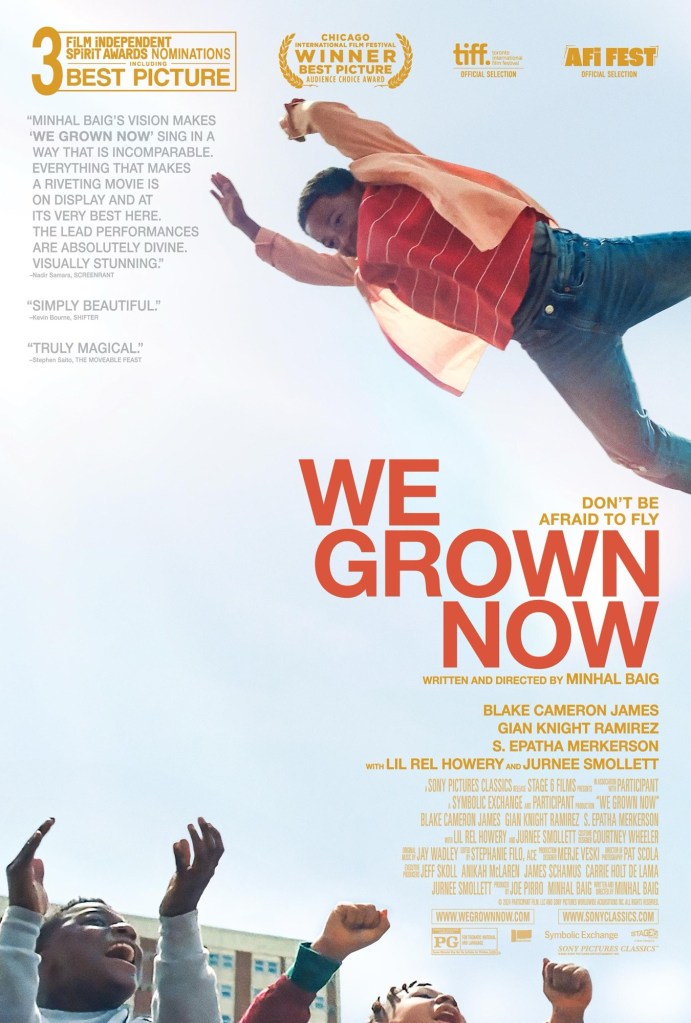
We Grown Now is based on a true location and time. The story forms from there. It’s a thoughtful, sensitive movie with a Spielbergian kind of dreamy, wide-eyed childlike pensiveness – but not so much that it gets silly, or silly too often. At 93 minutes, and rated PG, the whole family can and should see it. I wish it was playing in more theaters.
A few opening captions tell us about the Chicago neighborhood of Cabrini Green – a housing project for many Black families over the years. We Grown Now has us in the fall of 1992. The characters we follow the most are Malik and Eric – lifelong best friends and next-door neighbors, and probably around 10 years old. The only actor I recognized was Lil Rel Howery as Eric’s father, in an effective dramatic performance. Stripped of his usual scene-stealing comic relief from Free Guy and Get Out, perhaps Howery will have a career arc like Robin Williams and Jim Carrey, who transitioned into serious roles without a need to be funny and wacky all the time.
The majority of the film focuses on Malik and his family. He lives with his sister, mother, and grandmother. The father is long deceased, but Malik has a recurring dream with him in it, and the family (whole again) living in a spacious suburban house with two stories and a garden outside. Other than Spielberg, I could best compare We Grown Now to a Terrence Malick movie, and like my beloved The Florida Project, it’s one of those movies that doesn’t devote every last minute to advancing a plot. It’s not afraid to meander. Most of the scenes just allow these characters to live, breathe, and be.
Jurnee Smollett, as Malik’s mother Dolores, shines in two of my favorite scenes. When Malik finally comes home late after being MIA (he and Eric cut school to visit a museum, of all places), Dolores spends a couple minutes hugging and kissing him, and praising Jesus that he’s ok, before laying into him. (Cabrini-Green had been extra on-edge lately due to a recent shooting there.) And in another scene, she’s throwing her name into consideration for a great position at work that’s opened up. Dolores is asked if she has a car. She doesn’t. (This is the part of Chicago with a lot of trains and busses.) For a long time, the camera is just on Dolores. When we finally do see the woman behind the desk, she is also Black, and tells her that she’d be great for it. It would require moving 3 hours away to the suburbs, and getting a car, but she encourages Dolores to go for it. I was bracing myself for an obligatory scene where a great employee gets passed over for a promotion because of their race, but was pleasantly thrown for a loop.
The last of Cabrini-Green was torn down in 2011, but lives on, thanks to meaningful, memorable pieces like We Grown Now. The tone it has set continues through the end credits, as we are shown pictures of some of the real-life former residents from the OG C-G’s glory days. 1992 wasn’t that terribly long ago. Many of the children from then are likely still with us. They grown now, but what stories they must have.
Grade: B+
 Film Reviews by Mark
Leave a comment