Grade: B-
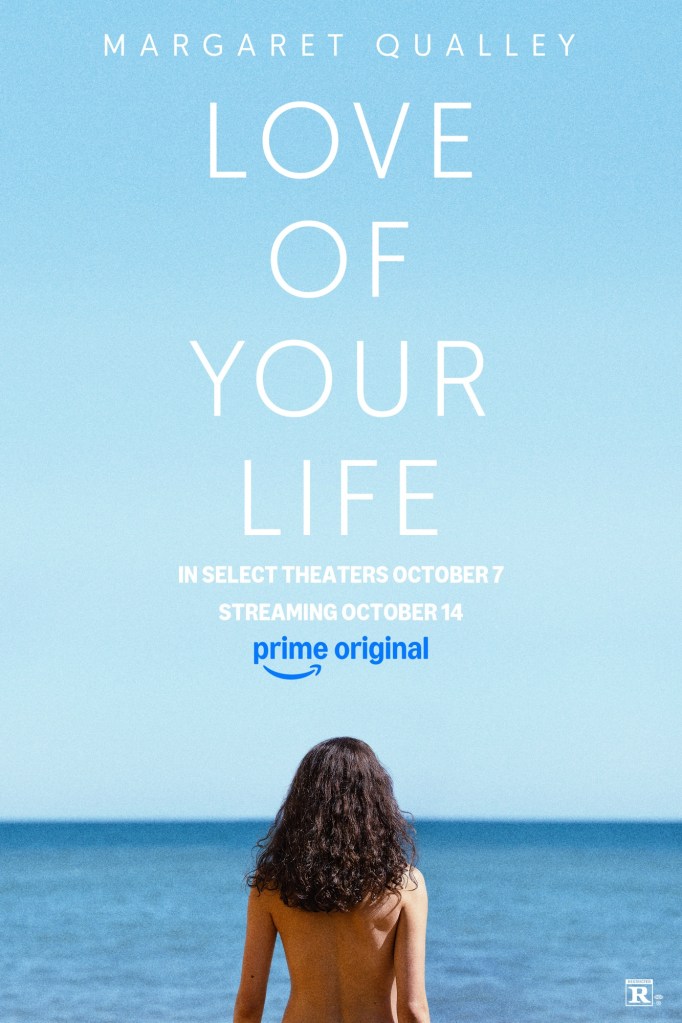
I knew almost nothing about Love of Your Life. It was very interesting to go into it blind. It could have been about literally anything, as far as I knew. Are there unicorns in it? Is it a suspense thriller? Is it erotic? Is it an erotic suspense thriller about unicorns? I had those questions. I won’t talk about the plot too much, in the interest of allowing you at least some of the experience I had in watching it unfold.
The first half hour sets up a delightfully charming romance and family dynamic. I appreciated that it isn’t saying “now that these two people have found each other, their lives will be perfect.” After the montages of them walking through the park and getting to know each other, we see arguments and other glimpses of the post-honeymoon period when reality sets in. It’s still just as good. They obviously love each other even when they get on one another’s nerves.
Once all this had been established, I wondered where it would go from there. The boyfriend’s evasiveness when asked what he does for work made me wonder if the movie might veer into thriller territory. He just says it’s complicated to explain. Uh oh. That sounds ominous. Will that somehow come into play later? Margaret Qualley’s character is a nurse, and part of the first act takes place in the spring of 2020, as we see COVID start happening. Then I wondered, “Is this going to turn into a tense medical drama, like ER?”
Love of Your Life settles into an obvious genre a third of the way through. Qualley is the star, carrying the movie with the same appeal her mother Andie MacDowell had at the peak of her career. The cast also includes Aaron Pierre (Rebel Ridge), Gabriel Basso (J.D. Vance in Hillbilly Elegy), Catherine Keener, and another famous person’s child: Patrick Schwarzenegger.
Writer Julia Cox (Nyad) repeatedly employs a technique that I found clever at first, but increasingly frustrating as the movie went on. Characters frequently don’t come right out and say what’s going on, leaving it up to the viewer to pay attention and connect the dots for themselves. This works well in an early scene at a large family gathering, where speeches happen. I kept waiting for a proposal, but it turns out that had already happened, and this was a wedding. Nobody says the words “wedding” or “married” until the very end of the scene.
It wears thin later on. Somebody says, “We haven’t seen each other in a long time…” and we’re supposed to automatically infer the unspoken second half of that sentence: “…and in that time, I’ve become involved with somebody else.” The most unnecessary example is a scene at a restaurant, where Qualley suggests ordering dirty martinis for old time’s sake, and the person she’s with tells the server, “Uhh, I’ll just have sparkling water, please.” I’m paraphrasing, but the dialogue that follows goes something like this: “Wow, really?” “Yeah. Shocker, huh?” “How long?” “A while.” At that point, there’s no reason not to simply say, “I’m sober now.”
The best scene in the movie happens near the end, and it’s between Qualley and Keener. I give the film credit for resolving every important plot point it’s brought up, and this was the last remaining one that needed closure. It’s here that Cox’s screenplay stops being cagey and is allowed to breathe. The dialogue is beautiful, with lines that genuinely touched me. I’m glad I saw Love of Your Life. Once it arrives where it’s going, it emerges as a thoughtful piece with a smart, unique way of commenting on the emotions it explores.
Grade:
There it is. What do you think of that?
Sorry. The script is rubbing off on me.
Grade: B-


Leave a Reply