Grade: B
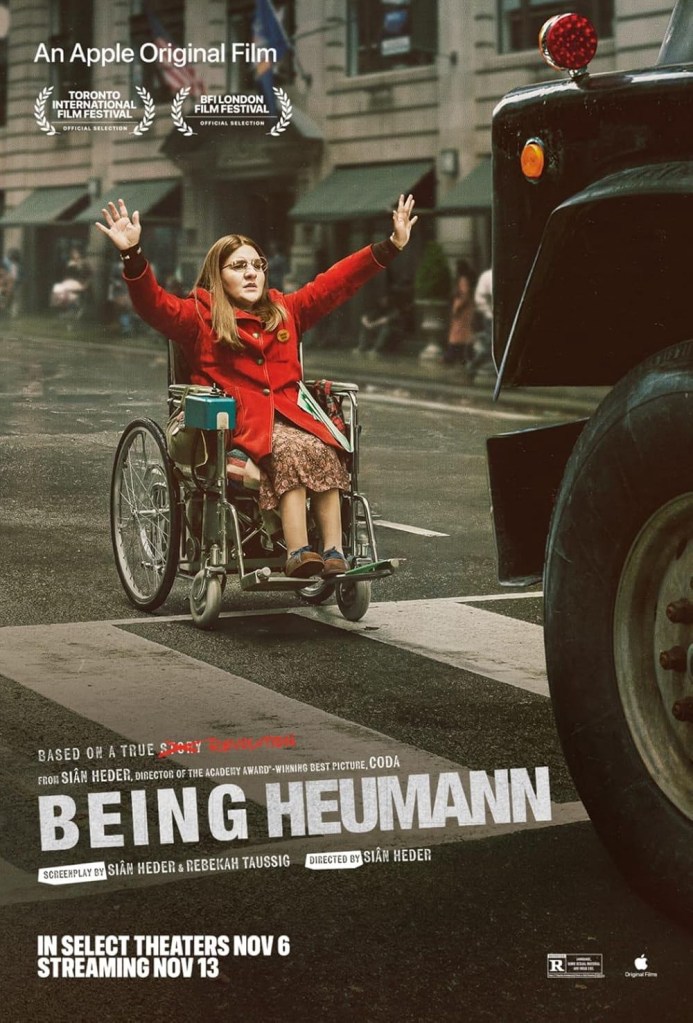
Being Heumann is director Sian Heder’s continued effort to elevate and raise awareness of a marginalized group. Her Oscar Best Picture winner CODA (an acronym for “child of deaf adults”) put a spotlight on the Deaf and CODA communities. Being Heumann has her bringing attention to people with disabilities, as it tells the true story of Judy Heumann leading a crusade for disability rights.
Section 504 of the Rehabilitation Act of 1973 prohibits discrimination against people with disabilities in programs and activities receiving federal funding. It pertains to non-discriminatory hiring practices, wheelchair-accessible ramps, and the like. By 1977, the law still hadn’t been properly implemented. It was missing a signature from Joseph Califano, the Secretary of Health, Education, and Welfare. Mark Ruffalo plays Califano as a well-meaning man in a quandary. He’s sympathetic about their situation, but signing this will cost the country billions, and will require a quick turnaround for construction. The idea is daunting to him. This isn’t, he observes, simply about having a seat on the bus. It’s about a brand new bus.
Judy Heumann, with help from Kitty Cone, staged a sit-in at the San Francisco Federal Building. It became the longest occupation of a federal building in American history. Most of the participants were wheelchair users, but the blind, deaf, little people, and those with Down syndrome came along too. One of my favorite Barenaked Ladies deep cuts is “Helicopters,” which is about a journalist who is unable to mentally move on from their latest story. The song came to mind as I tracked the character arc of Dylan O’Brien as news reporter Evan White. When he invites himself in with them, it’s initially just to chase an entertaining scandal, but he becomes invested in the cause.
The movie heavily prioritized authentic disability casting. Madeline Delp, as Kitty, is a charming and effective standout. Her IMDb bio states “she is set for a breakout year in 2026 for her major role in the Apple Original Film Being Heumann.” Granted, those bios can be written by anyone – a friend, family member, agent, or even Delp herself. But I agree with it, and I don’t think it’s overselling. Ruth Madeley, from England, delivers a consistently convincing American accent, and carries the movie as Judy. Though not technically paralyzed as the real Heumann was, she regularly uses a wheelchair, as she has spina bifida.
I appreciated the craft, performances, and the historical significance of the story, but for most of the runtime, I was missing a compelling cinematic experience that would draw me in. The last 20 minutes or so is what earns Being Heumann its grade. I was planning on going lower, as the majority felt more like a history lesson than a movie. As good as the lesson might be, I felt like I was in school, watching one of those educational “movies” that nobody’s heard of, and was probably meant to be shown in schools.
But it comes to life as it ends, and finally becomes the movie I was wanting. Heder brings it home with a touching cinematic flourish, but the movie doesn’t say “now that this has happened, everything is solved and life is perfect.” The victorious event at the end is just the first step in a decades-long process, one that perhaps many can argue is still ongoing. This is a film with heart, and the final act at last made me feel that heart. I’m glad I stuck with it.
Grade: B


Leave a Reply